According to the theocentric posthumanism that I have been laying out in this blog, there is no objective essence of humanity that divides the human from the non-human. However, there is a concept of humanity in the mind of God, which may be (and is, in my view) the concept expressed in divine revelation that treats humans as the most significant moral subjects, if not the only ones. So, humanity ends up being important without humanism, though not due to anything inherent to being human.
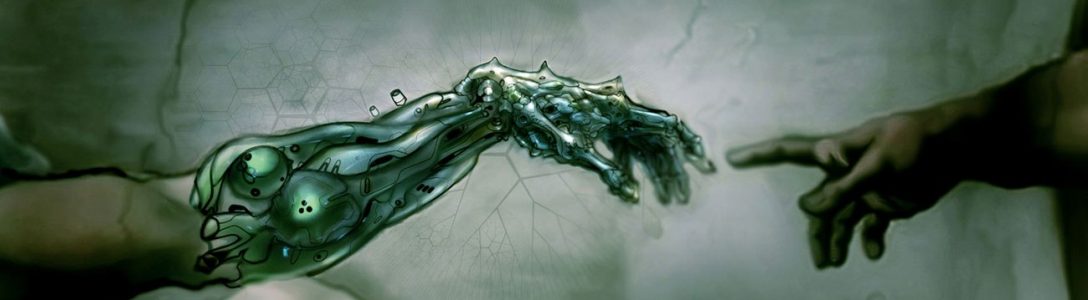
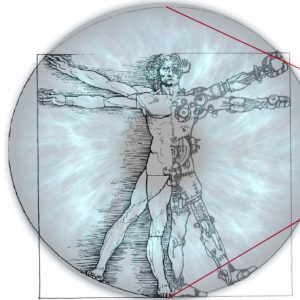
This does not solve the problem of the boundaries of humanity. How much genetic manipulation can there be before the resulting organism ceases to be human within the meaning contemplated in divine revelation? The same question could be asked with respect to cybernetic enhancement. Just like the question of my last post, concerning the messy problem of identifying and interpreting divine revelation, deciding the boundaries of the human is messy indeed. Yet, as with that previous question, we cannot afford to opt out of answering it.
It is a problem that calls for our best, all-things-considered judgements, taking into account historical lines of human descent and any implicit yet clear meaning of divine revelation, and a conservatism when the boundaries are being pushed. After all, the cost to a sentient organism of falling outside of any status of moral subjecthood known to be recognised by the deity includes, at best, reduced moral standing and, at worst, seemingly undeserved, overwhelmingly adverse consequences after misunderstanding applicable moral requirements.
This conservative ramifications of a theocentric posthumanism, in contrast to the morally expansive categories of moral subjecthood suggested by other posthumanisms, still does justify a charitably expansive conception of the human. The idea of downgrading the humanity of some group on the basis of race, gender or disability should always have been regarded as abhorrent, and it speaks to the lack of theoretical motivation for historical humanism that this was ever not so.
However, it must be acknowledged that the boundary between the human and the non-human will be necessarily vague for want of an objective essence. Without knowledge of the true boundaries of the divine concept, arbitrary boundaries will need to be drawn to prevent any overlap between the clearly human person and the clearly non-human genetically or cybernetically modified being. The important point to stress in this is that we need not be embarrassed about making relatively arbitrary distinctions for the sake of policy and policy implementation. These boundaries are not intended as conclusive findings of scientific or even sociological inquiry into objective essences, which would then need to establish some kind of privileged demarcation.
To touch on a few issues, I think embodiment is a historical and theological mark of humanity, so any transhumanist ambitions to transcend the fleshy limitations of our current form are ruled out immediately. As to the cut-off between human and non-human after genetic or cybernetic enhancement, I think that the current, generally observed rule of prohibiting enhancement altogether is the soundest principle, while still allowing therapeutic applications of genetic and prosthetic technologies. I also think that giving any non-human animal moral standing comparable to that of humans is completely ruled out, though this is not the same as a licence to mistreat animals and there is still much to be said about the ethics of human behaviour towards animals, including as regards the unsustainability of many current practices of animal-farming and captivity.

 Theocentric Posthumanism