The two feature films directed by Alex Garland, Ex Machina (2014) and Annihilation (2018), have something in common that intrigues me, beyond the obvious similarity of their sci-fi genre.
Mild ***SPOILERS*** follow. Mild ***SPOILERS*** follow. Mild ***SPOILERS*** follow. Mild ***SPOILERS*** follow. Mild ***SPOILERS*** follow. Mild ***SPOILERS*** follow. Mild ***SPOILERS*** follow. Mild ***SPOILERS*** follow. Mild ***SPOILERS*** follow.
While the former concerns the emancipation of an artificially intelligent android from its hubristic creator, and the latter concerns an encounter with an alien life form engaging in destructive re-creation for no comprehensible reason, both concern the potential for the universe we inhabit to support the flourishing of forms of life so alien to our own that we cannot even be sure that they do constitute forms of life. Garland’s direction focuses on amplifying disconcerting and uncomfortable elements, especially the score and unrelatable characterisation, connecting the resulting emotional impact with alien figures designed to evoke the horror of the uncanny: machines with human skins, but without human emotion; humanity rendered ghastly and unpredictable by the warping of body and mind.
Both films are reminiscent of the cosmic horror of H. P. Lovecraft, which is horrific less for the danger that alien creatures present to human protagonists than for the suggestion that the universe fosters the development of beings with unfathomable and terrifying motivations as much as it fosters that of humanity, if not more so. We are not ruffled by the existential threat, per se, but by the existential angst induced by contemplating that the universe might not be there for us, after all. The universe might be entirely indifferent and hostile to human life, in which case this small green and blue planet in an unremarkable corner of only one of many galaxies starts to feel insignificant indeed. It is the horror of realising that the universe will go on, barely registering a difference, after our species is casually dusted from existence by an errant asteroid one Sunday afternoon in October.
It is perhaps not a coincidence, then, that Garland also wrote the screenplay for Danny Boyle’s zombie-virus outbreak film, 28 Days Later. A virus is another entity whose status as a life form is on the boundaries of our definitions, and to which we reflexively attribute a malevolence that could only be harboured by something acting with a more familiar, human sense of purpose. The horror of the uncanny is once again evoked as the once-human vessels of the virus embody an absolutely unsympathetic threat. It plays upon our fear of being summarily displaced in this indifferent universe by something irreconcilably alien, even to the extent of our bodies being repurposed for purposeless violence – at least, from our perspective. To a lesser extent, a real viral outbreak has the same effect, as each host’s normal bodily functions are impaired and reapplied, at macro- and microscopic levels, to the further production and redistribution of the virus.
This brings me, of course, to that elephant in the room, the COVID 19 pandemic. Yes, we are anxious and fearful for the toll being levied in human lives. However, there may also be a tinge of cosmic horror with the realisation that our global network of human systems and endeavours can be brought to silence and inertia so abruptly and efficiently by an alien potential that had been lurking in the background of our dramas and fixations, and continues to do so in other iterations. So many alive have been born into a world that did seem to be there for us, and within our control, if only we would seek a common purpose motivated by our shared humanity. How terrifying it must be, then, for many of the youth in the perennially prosperous West to contemplate the alien phenomena that might arise to disprove our pre-eminence in even this small corner of but one galaxy. Then again, maybe not. The hubris of our presumption runs deep.
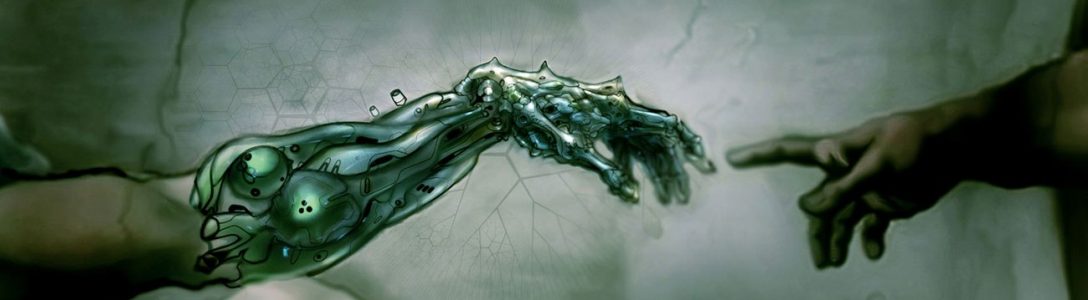
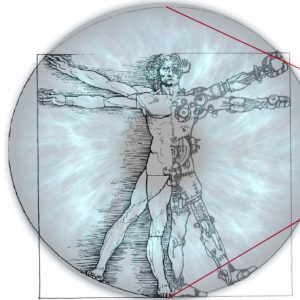
It is in light of such fear and/or hubris that I see the folly of posthumanist discourses that seek to find hope for humanity in the betrayal of our human embodiment, either by promoting ascension to cybernetically or genetically enhanced forms, or conversely, by ostensibly championing human embodiment whilst attributing equivalent value and dignity to that of non-human species and environmental systems. It seems to me that either way of devaluing the human, whether as a transitory form or as merely one form among many, fails to give proper regard to the possibility that our universe might be equally conducive to forms of life (or similarly complex molecular processes) that flourish at the expense of both our own form of life and of those familiar forms of life to which we tacitly attribute a sympathetic benevolence. There is a naïve optimism, here, in trusting that darkly alien forces would not be unleashed by enthusiasm to blur the lines between the human and the non-human. This is an optimism, against all evidence, that the universe privileges life forms sufficiently like ours, so that our non-human descendants or companion-species hybrids would be sufficiently like us to ensure that the extinction of our present humanity need not be feared, either due to its improbability or its desirability.
The obvious response to this warning, to be expected from such posthumanist quarters, is that the line between the human and non-human has always been blurred, so there is no principled difference between holding onto our humanity and embracing an experimental attitude to our future embodiment (or otherwise). Yet, this is not to provide a reason to be optimistic about our posthuman future. Rather, it is merely to counter that, if the experimental posthumanist has no reason to be optimistic, then neither does anyone else. A pox on all our houses! All are punish’d! We are all left in pessimism, at the mercy of cosmic horror.
And yet, did the title of this post not imply that we can have cause for optimism?
We can accept that the possibilities and potentials of this universe are amenable to the propagation of darkly alien threats, inciting us to prepare contingencies in mitigation of these risks, without abandoning the optimism that this universe is here for us, for our benefit and our enjoyment. And by ‘us’ I mean humanity in the familiar sense that we bump into in the public square (apart from when we are under an enforced social isolation, of course). However, in the absence of evidence that the universe has any particular bias towards the existence and flourishing of the species homo sapiens, that optimism must derive from confidence in a power transcending the forces of nature that seem so indifferent to humanity, and at that, a transcendent power that ultimately controls those forces with a concern for us as persons, after all. The advantage of such faith is that it affords us the assurance that all will end well, even when viewed from the darkest vantage point. The disadvantage is that we must surrender our sense of control over our future, because there is nothing within us that can vouchsafe our deliverance from the lurking perils of this universe in which we find ourselves. Still, events like this viral pandemic can help us to willingly part company with illusions of control.
One more thing follows, should we choose the optimism of faith in a higher, personally interested power. That is, we must not devalue the present embodiment of our humanity, contingent and transitory though it may seem given the physical possibilities presented to us by our universe. If there is a transcendent power giving us reason to be optimistic about our future, then the class of beings in the extension of the pronoun ‘us’ necessarily takes the form determined by the interest of that transcendent, personally interested power, rather than that of our conjectures. So, who is this Power, and in whom has it expressed a personal interest to date?

 Theocentric Posthumanism