The history of Western modernity has been the history of humanism, and more particularly, the history of a shifting of the universal centre of potential progress and value, from God to humanity, theocentrism to anthropocentrism. Without initially diminishing an entrenched commitment to theism, the Renaissance and the Enlightenment witnessed the gradual displacement of the external impetus advancing social and material conditions towards a state of paradise, from the sovereign will of a transcendent God to the autonomous will of human beings when living in accordance with their authentic nature. Relatedly, though not dispensing with the role of the Deity as the enforcer of the moral order, the ultimate locus of the Good migrated with the reversal of a dependence relation: the flourishing of humanity is not good because God wills it; God wills the flourishing of humanity because that is the Good.
Despite some disruption caused by vacillating ideas as to the true nature of humanity, concerning whether we are essentially characterised by the rationality emphasised in the Enlightenment or, more broadly, by intuitive faculties revalorised by Romanticists, the ascendancy of the humanistic conviction endured into the twentieth century until it was irretrievably shaken by a threefold crisis. Firstly, the popular experience of two world wars and the existential threat of the ensuing Nuclear Age undermined faith in humanity’s inevitable progress towards a utopian future guaranteed by benevolent technological advancement. Secondly, the success of scientific inquiry into the nature of the universe, initially bolstering confidence in humanity’s central place over all things, destabilised that picture as the inquiry was turned back on the inquirer, exposing a physically and socially constituted subject whose operations could be sufficiently explained by localised and contingently realised forces produced by an otherwise indifferent cosmos. Thirdly, there was a growing suspicion that the demarcation between the human and the non-human coincided, not with a natural kind, but with the interests of dominant groupings in perpetuating power differentials across divides of race, class, gender and sexuality.
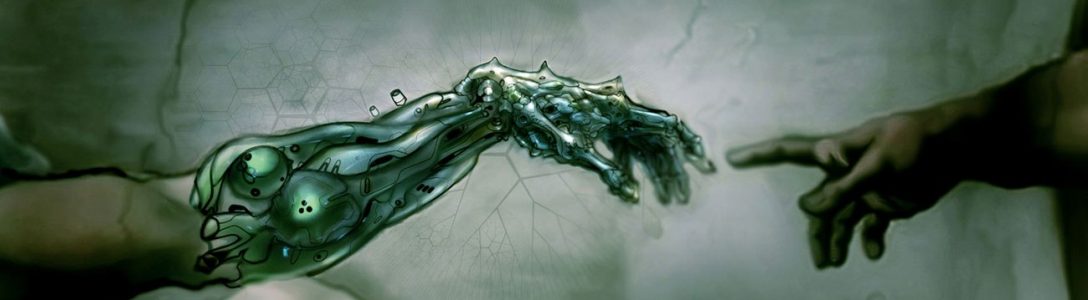
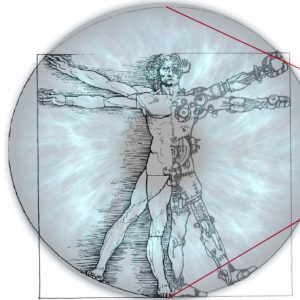
The negative critique of a growing anti-humanist sentiment could only sustain intellectual enthusiasm for so long, and it has developed into a positive enterprise of searching for a viable posthumanism, i.e. new ways of re-centring or de-centring the centre of potential progress and value. Though the labels are contested, we can distinguish between posthumanisms of immanence and transcendence, both of which locate the grounds of human ethics and knowledge beyond the human, yet respectively within and beyond the network of material processes and structures once distinguished as the natural order. Posthumanisms of immanence can be subdivided into transhumanism and critical posthumanism (Nayar 2014: 6-9). The former is a hyper-essentialist humanism, which extends the possibilities for humanity beyond our embodiment to cybernetically or genetically altered forms. It is hyper-essentialist in that it tends to focus narrowly on rational and ethical capacities as the characteristics of true humanity, which can therefore transcend our biological species. Yet, as a dogged essentialism, it fails to address the problems that have arisen for the very idea of humanism.
The latter posthumanism of immanence embraces humanity’s embodiment and contingency, hailing the end of human exceptionalism as an opportunity to revalorise relationships of mutual recognition and cooperative action between humanity and forms of life previously rendered subsidiarily other despite our interdependence with them due to the irreducible hybridity of our embodiment. Though accommodating the pluralistic spirit of our age, this alternative tends to merely shift the humanistic bubble in the carpet, transforming the problem of arbitrarily privileging certain conceptions of humanity into one of arbitrarily privileging altruistic and cooperative forms of life. Thus, attempts to conceive of a posthumanist theology, such as that of Thweatt-Bates’ (2012: 109) reinterpretation of religious doctrines like Christianity’s Imago Dei through an immanently de-centred lens, will sink with the spirit of the age just as humanistic reinterpretations have, rather than buoying it.
Instead, a new direction for the philosophy of religion is to be found in elucidating and elaborating on posthumanisms of transcendence that draw upon substantively metaphysical resources of religious traditions, rather than the merely symbolic. Whether promoting a return to Western theocentrism or exploring approaches drawn from other religious traditions, the displacement of the humanistic project of locating the transcendent within the immanent has both created an explanatory vacuum in domains once occupied by humanism, and loosened humanistic assumptions that had made certain, alternative ways of conceiving of our humanity unthinkable. Posthumanisms of immanence are now self-consciously rejecting the picture of humanity as the autonomous external mover of a distinct natural order, along with the concomitant measurement of all value against narrow metrics of human flourishing achieved thereby. The philosophy of religion can similarly embrace this new freedom from humanistic presuppositions in reconsidering explanatory roles for the transcendent posits of religious traditions, thusly establishing more viable alternatives to posthumanisms of immanence after the Death of Man.

 Theocentric Posthumanism