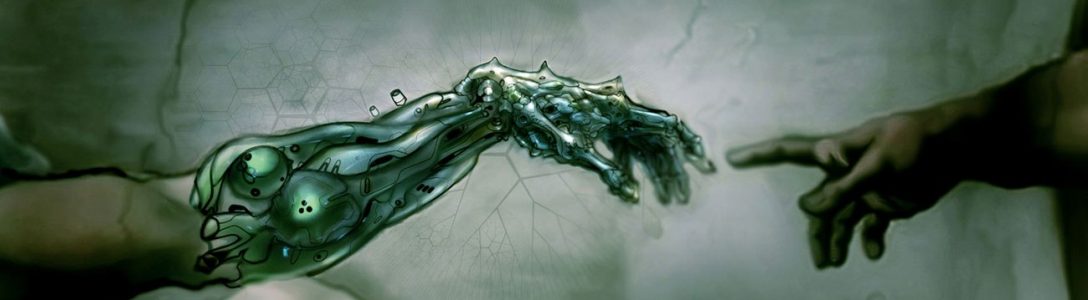
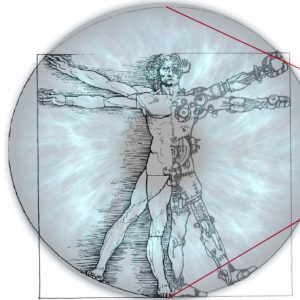
In addition to shifting the centre of value, as discussed in my last post, posthumanism shifts the universal centre of potential for progress. Transhumanism extends the human centre, critical posthumanism relocates it to myriad ‘Others’, and theocentric posthumanism relocates it to God. To explain, consider that a key idea of humanism since the classical period,… Continue reading Coming to Terms with Determinism
Author: theopohomo
The Posthumanism of Theological Voluntarism
Anti-humanism is the decentring of humanity as the universal centre of value and potential for progress. Posthumanism is the re-centring of value and potential elsewhere. Transhumanism re-centres on an extended and enhanced concept of humanity. Critical posthumanism re-centres on a multiplicity of centres, including Braidotti’s strategy of re-centring on living matter in any form. Theistic… Continue reading The Posthumanism of Theological Voluntarism
The Metaethics of Posthumanist Discourse – Part 2
This post continues from my last post, which was really an argument for a theistic metaethics, i.e. there are no ethical or moral truths without theistic coercion enforcing moral obligation. That was more like an apologetic argument and less like an argument relating to posthumanism, but that is about to be addressed. Next, let’s return… Continue reading The Metaethics of Posthumanist Discourse – Part 2
The Metaethics of Posthumanist Discourse – Part 1
Transhumanism and critical posthumanism are, above all, ethical theories about how we should respond to the realisation that we live in a posthumanist age. Yet, their theorists fail to direct their critical-realist lens upon the damage done to the possibilities for ethics by a scientific-materialist imaginary. They also fail to appreciate the coercion inherent in… Continue reading The Metaethics of Posthumanist Discourse – Part 1
On the Very Idea of a Human Nature
Anti-humanism is, at its core, an anti-essentialism. This will take some setting up. The essence or nature of something is an absolute answer to the question, “What is it?” That is, an essence is what something is independently of any temporary context or state. That is a tree, this is a planet, I am a… Continue reading On the Very Idea of a Human Nature
The Order of Things – Addendum
Before moving on to other matters, I thought that it would be worthwhile to address another argument for the situated and contingent nature of human reason that feeds into the poststructuralist bias towards anti-humanism. Influenced by Friedrich Nietzsche, Martin Heidegger, in Being and Time (1927), stressed a problem with the received view that information about… Continue reading The Order of Things – Addendum
The Order of Things
The tenor of theocentric posthumanism is captured by its response to a landmark text of anti-humanism, Michel Foucault’s The Order of Things (1970). Often cited as a catalyst for post-colonial theory and politics, it has surprisingly little to do with a critique of humanism as a justification for oppression of the Other, despite containing Foucault’s… Continue reading The Order of Things
Conceptual Distinctions
It will help to clarify concepts to which I refer by certain terminology, especially since many terms in the discourse of posthumanism seem to be contested. By ‘humanism’, I mean the view that humanity is the centre of value and potential for progressive change in the universe, where ‘humanity’ is a natural kind that objectively… Continue reading Conceptual Distinctions
The Grand Narrative of Humanism
The idea of theocentric posthumanism begins with the thought that there was a pre-humanism from which Western humanism deviated. Thereafter, the grand narrative of humanism played out over four centuries until its exhaustion by the end of the twentieth century. On the theocentric view, this exhaustion was inevitable given the foundations of human nature and… Continue reading The Grand Narrative of Humanism
The Rationale
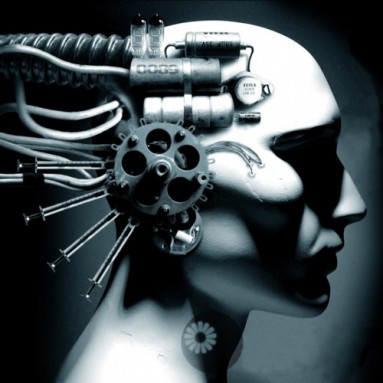
This blog is intended as a publicly externalised thought process concerning the potential for the discourse of critical posthumanism to serve conceptions of theism and humanity that reject human exceptionalism apart from the privileging intentions of a divine creator. It is proposed to consider the anti-essentialist tendencies of the discourse, not as leading inevitably to the… Continue reading The Rationale
 Theocentric Posthumanism
You must be logged in to post a comment.