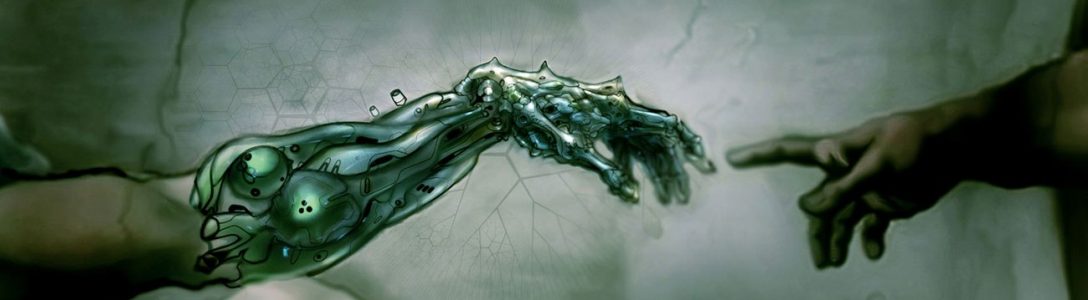
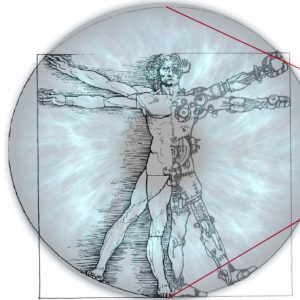
Humanistic presuppositions about individual and social development have provided the rationale for education since as early as Western culture’s Renaissance period. The belief that the individual could be reformed through education, to the end of bettering the condition of society as a whole, carried a practical kernel of humanism that sprouted into an explicitly anthropocentric… Continue reading Applying Theocentric Posthumanism to Curriculum Theory
Category: Anti-essentialism
A Draft Introduction for a Possible Article on the Philosophy of Religion
The history of Western modernity has been the history of humanism, and more particularly, the history of a shifting of the universal centre of potential progress and value, from God to humanity, theocentrism to anthropocentrism. Without initially diminishing an entrenched commitment to theism, the Renaissance and the Enlightenment witnessed the gradual displacement of the external… Continue reading A Draft Introduction for a Possible Article on the Philosophy of Religion
Against Telos Regarded as Intrinsic Proper Function or Similar
I am an anti-essentialist in many respects, though there are some ideas denoted by some senses of the term to which I would not give assent. For example, I believe in a primitive kind of individual essence that explains the persistence of identity through change. However, I certainly do not believe in robust generic essences… Continue reading Against Telos Regarded as Intrinsic Proper Function or Similar
Bearing the Divine Image and Harmonising with the Universe
The exclusive humanist’s exceptionalist dogma of humanity’s peculiar importance, our central place in the universe, is defeated by realisations grasped in our posthumanist age concerning the contingency of the species’ essential or conceptual boundaries, the functional similarity between us and actual or possible non-human life forms, and the ultimate indifference of physical and chemical laws… Continue reading Bearing the Divine Image and Harmonising with the Universe
Staying with the Trouble
Having recently read Donna Haraway’s text, Staying with the Trouble (Duke University Press, 2016), I now offer some thoughts in response. Haraway is best known for her seminal essay, ‘The Cyborg Manifesto’, first published in 1985, in which she explores the idea that humanity has always been constituted as a process of species becoming that… Continue reading Staying with the Trouble
Naturalness Talk
The anti-essentialism motivating the posthumanist turn tacitly rejects realism about two distinct forms of essence: descriptive and prescriptive. The first relates to the absence of any objective correctness or naturalness as to the boundaries of the concepts we apply in language and thought, let alone the essence concepts (sortals) that denote the primary kind to… Continue reading Naturalness Talk
The Performance of Gender Oppression
In my last post, here, I pointed out a way in which one futurist suppresses a tacit commitment to objective morality. This suppression is a common theme of posthumanist discourse, because anti-essentialist ethics often tries to have its cake and eat it, too, by declaring all essences to be socially constructed, and yet trying to… Continue reading The Performance of Gender Oppression
Alita: Battle Angel
***Mild Spoiler Warning*** James Cameron (producer) and Robert Rodriguez (director) have delivered an aesthetically stunning adaptation of the manga series, Gunnm, but at the expense of developing significant narrative tension and critical engagement with challenging ideas. Its failure to grapple with questions arising for human essentialism once the genie of genetic and cybernetic enhancement is… Continue reading Alita: Battle Angel
Against Appeals to Natural Law in the Public Square
Posthumanism is an anti-essentialism and, as such, it rejects arguments from humanity’s intrinsic nature to conclusions about law and morality. Or, at least, that is the logical consequence. It does not stop posthumanists from making ethical and culturally critical arguments that rely on a fluid conception of telos to, somewhat selectively, ground their normative claims.… Continue reading Against Appeals to Natural Law in the Public Square
Our Posthuman Future
In his book, Our Posthuman Future (2002), Francis Fukuyama attempts to defend humanity as a category of exclusive moral and political significance by invoking a brand of Aristotelian essentialism, as follows: Aristotle argued, in effect, that human notions of right and wrong—what we today call human rights—were ultimately based on human nature. That is, without… Continue reading Our Posthuman Future
 Theocentric Posthumanism
You must be logged in to post a comment.