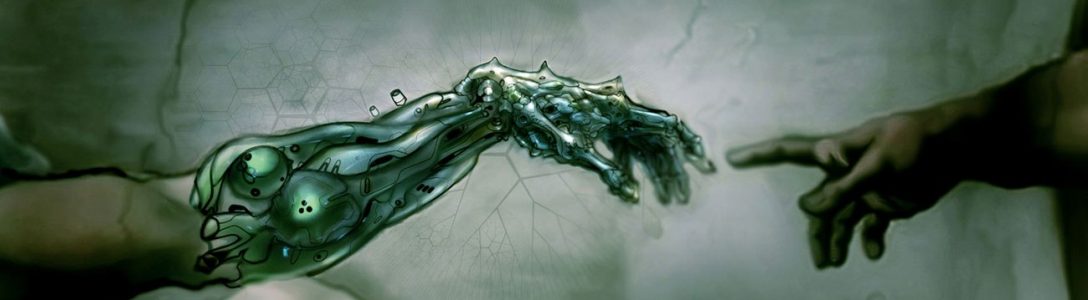
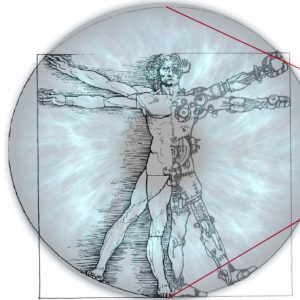
Humanistic presuppositions about individual and social development have provided the rationale for education since as early as Western culture’s Renaissance period. The belief that the individual could be reformed through education, to the end of bettering the condition of society as a whole, carried a practical kernel of humanism that sprouted into an explicitly anthropocentric… Continue reading Applying Theocentric Posthumanism to Curriculum Theory
Category: Concepts
Posthumanism and Ockham’s Razor
Ockham’s Razor is the principle that we should not multiply entities beyond necessity. What that means has various weaker and stronger versions. One on the weaker side merely advises us, when coming up with a theory of the fundamental kinds of things (or stuff or structures) in the universe, or in any smaller domain, to… Continue reading Posthumanism and Ockham’s Razor
A Draft Introduction for a Possible Article on the Philosophy of Religion
The history of Western modernity has been the history of humanism, and more particularly, the history of a shifting of the universal centre of potential progress and value, from God to humanity, theocentrism to anthropocentrism. Without initially diminishing an entrenched commitment to theism, the Renaissance and the Enlightenment witnessed the gradual displacement of the external… Continue reading A Draft Introduction for a Possible Article on the Philosophy of Religion
Against Telos Regarded as Intrinsic Proper Function or Similar
I am an anti-essentialist in many respects, though there are some ideas denoted by some senses of the term to which I would not give assent. For example, I believe in a primitive kind of individual essence that explains the persistence of identity through change. However, I certainly do not believe in robust generic essences… Continue reading Against Telos Regarded as Intrinsic Proper Function or Similar
Divine Omnipotence and Narrative Explanation
My working definition of explanation is the provision of new facts to bring the world back to expectation. For example, when I wake up in the morning, I expect to see my car sitting in the driveway. If, one morning, I were to wake up and see that my care is absent from the driveway,… Continue reading Divine Omnipotence and Narrative Explanation
Bearing the Divine Image and Harmonising with the Universe
The exclusive humanist’s exceptionalist dogma of humanity’s peculiar importance, our central place in the universe, is defeated by realisations grasped in our posthumanist age concerning the contingency of the species’ essential or conceptual boundaries, the functional similarity between us and actual or possible non-human life forms, and the ultimate indifference of physical and chemical laws… Continue reading Bearing the Divine Image and Harmonising with the Universe
Naturalness Talk
The anti-essentialism motivating the posthumanist turn tacitly rejects realism about two distinct forms of essence: descriptive and prescriptive. The first relates to the absence of any objective correctness or naturalness as to the boundaries of the concepts we apply in language and thought, let alone the essence concepts (sortals) that denote the primary kind to… Continue reading Naturalness Talk
Materialism and Representation
Much posthumanist, nonhumanist or antihumanist discourse is motivated by a methodological commitment to materialism. This is so notwithstanding the question mark over what the more detailed commitments of materialism actually are, e.g. whether matter is prior to or dependent upon the form of objects. In other words, whether matter is fundamentally things or stuff, or… Continue reading Materialism and Representation
Identifying the Human
According to the theocentric posthumanism that I have been laying out in this blog, there is no objective essence of humanity that divides the human from the non-human. However, there is a concept of humanity in the mind of God, which may be (and is, in my view) the concept expressed in divine revelation that… Continue reading Identifying the Human
On the Very Idea of a Human Nature
Anti-humanism is, at its core, an anti-essentialism. This will take some setting up. The essence or nature of something is an absolute answer to the question, “What is it?” That is, an essence is what something is independently of any temporary context or state. That is a tree, this is a planet, I am a… Continue reading On the Very Idea of a Human Nature
 Theocentric Posthumanism
You must be logged in to post a comment.