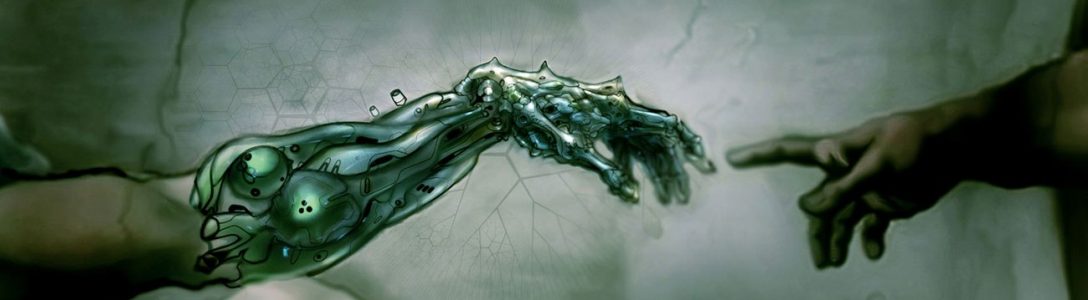
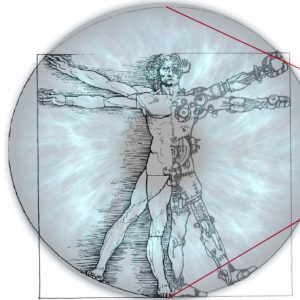
Though it does not seem to end up saying anything on a scale of grandeur to justify the title, rather appearing to peter out on the cusp of transitioning from a commentary about to humanity’s past to a substantial exploration of future possibilities, Yuval Noah Harari’s work of popular non-fiction about our possible trans- or… Continue reading Homo Deus
Category: Philosophy
Materialism and Representation
Much posthumanist, nonhumanist or antihumanist discourse is motivated by a methodological commitment to materialism. This is so notwithstanding the question mark over what the more detailed commitments of materialism actually are, e.g. whether matter is prior to or dependent upon the form of objects. In other words, whether matter is fundamentally things or stuff, or… Continue reading Materialism and Representation
A Substantial Posthumanist Self
The poststructuralist self is constructed by language and prone to prevailing and countervailing interpretations sustained through dynamic power relations. The critical posthumanist self is a functionally unified hybrid of dynamic natural, cultural and technological systems and self-organising materials. Either way, there does not seem to be enough, here, to explain the objective endurance of a… Continue reading A Substantial Posthumanist Self
Coming to Terms with Determinism
In addition to shifting the centre of value, as discussed in my last post, posthumanism shifts the universal centre of potential for progress. Transhumanism extends the human centre, critical posthumanism relocates it to myriad ‘Others’, and theocentric posthumanism relocates it to God. To explain, consider that a key idea of humanism since the classical period,… Continue reading Coming to Terms with Determinism
The Posthumanism of Theological Voluntarism
Anti-humanism is the decentring of humanity as the universal centre of value and potential for progress. Posthumanism is the re-centring of value and potential elsewhere. Transhumanism re-centres on an extended and enhanced concept of humanity. Critical posthumanism re-centres on a multiplicity of centres, including Braidotti’s strategy of re-centring on living matter in any form. Theistic… Continue reading The Posthumanism of Theological Voluntarism
The Metaethics of Posthumanist Discourse – Part 1
Transhumanism and critical posthumanism are, above all, ethical theories about how we should respond to the realisation that we live in a posthumanist age. Yet, their theorists fail to direct their critical-realist lens upon the damage done to the possibilities for ethics by a scientific-materialist imaginary. They also fail to appreciate the coercion inherent in… Continue reading The Metaethics of Posthumanist Discourse – Part 1
On the Very Idea of a Human Nature
Anti-humanism is, at its core, an anti-essentialism. This will take some setting up. The essence or nature of something is an absolute answer to the question, “What is it?” That is, an essence is what something is independently of any temporary context or state. That is a tree, this is a planet, I am a… Continue reading On the Very Idea of a Human Nature
The Order of Things – Addendum
Before moving on to other matters, I thought that it would be worthwhile to address another argument for the situated and contingent nature of human reason that feeds into the poststructuralist bias towards anti-humanism. Influenced by Friedrich Nietzsche, Martin Heidegger, in Being and Time (1927), stressed a problem with the received view that information about… Continue reading The Order of Things – Addendum
 Theocentric Posthumanism
You must be logged in to post a comment.